
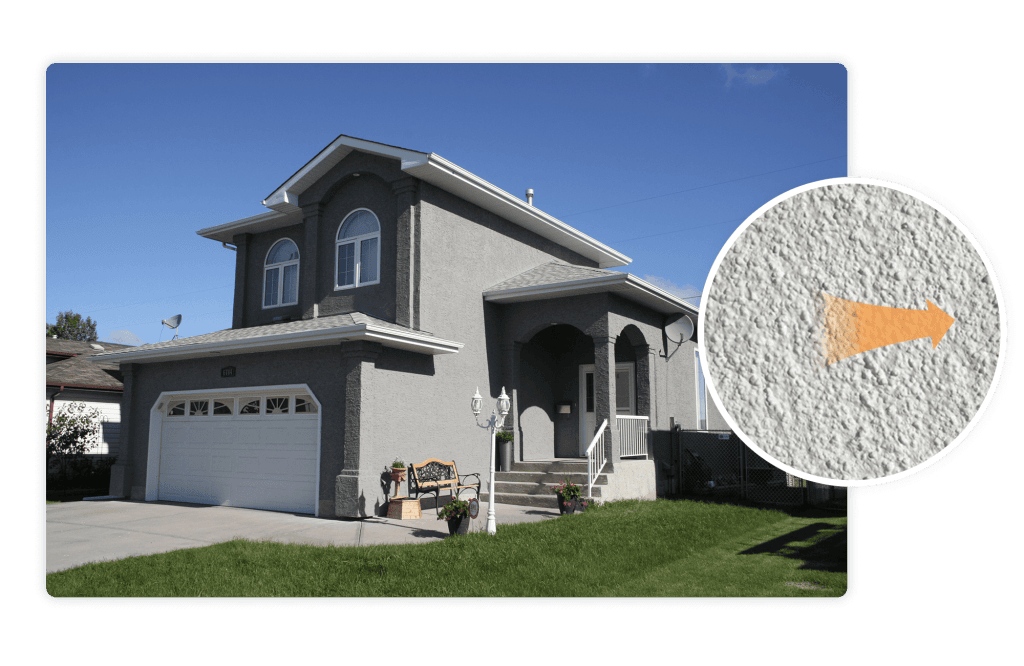
Smooth stucco gives walls a crisp, modern look that feels calm in daylight and polished at night. If you’re deciding between texture and a sleek finish, this guide shows how to make smooth stucco step by step—what to buy, when to apply, and how to finish so the surface cures flat and uniform. For a quick comparison, see our overview of smooth vs. textured stucco finishes.
What “Smooth Stucco” Really Means (and How to Make It)
“Smooth” refers to the finish coat you see and feel. There are several paths to the look, and each influences how to make smooth stucco on your project:
- Smooth trowel finish (cement-based): A fine coat tightened with a steel trowel as it firms, producing a low-profile, flat surface with subtle movement.
- Santa Barbara–style finish: Very fine aggregate, troweled tight for a near-plaster feel—soft variations, refined and classic.
- Acrylic or elastomeric skim finish: A thin re-coat that can bridge hairline crazing and deliver uniform color; excellent for refreshes over sound, painted stucco.
- Interior smoothing over texture: For orange peel or knockdown, a leveling compound or fine plaster is skimmed, sanded, and sealed before paint.
Your route depends on whether the work is interior or exterior, the current wall condition, and whether you plan to paint or use integral color.
Safety & Prep Essentials
A smooth finish magnifies what’s beneath. When learning how to make smooth stucco, safe, tidy prep is non-negotiable.
- Protection: drop sheets, plastic sheeting, painter’s tape, edge guards
- PPE: N95 or respirator for dust, safety glasses, gloves
- Cleaning: stiff brush, scraper, mild masonry cleaner, fresh water
- Repairs: patch mortar, fiberglass mesh at stress areas, compatible bonding agent if going over previously painted walls
Tools You’ll Reach For Most
- Steel finishing trowel (rounded corners reduce track marks)
- Margin trowel and hawk for loading and control
- Plastic or sponge float to blend transitions
- Mixer and paddle for uniform batches
- Straightedge to check flatness as you go
- Fine sanding gear (for interior skim systems)
Materials: Choose a System and Stick With It
- Cement-based finish coat (fine aggregate) for classic movement
- Acrylic/elastomeric finish for flexibility and color uniformity on re-coats
- Bonding primer/base when applying over painted or sealed stucco
- Primer or sealer as required by the manufacturer
- Integral color or high-quality masonry paint for the finished look
Consistency matters—keep batch ratios, mixing time, and water-to-material identical from start to finish.
Timing: The Secret to a Flat, Even Result
Dialing in timing is central to making smooth stucco that looks professional:
- Open time: Mix manageable batches, so you’re not chasing set material.
- Firm-but-workable stage: This is when you “tight-trowel”—compressing the surface to erase chatter marks.
- Cure intervals: Respect cure schedules to prevent ghosting and micro-cracking.
- Weather control (exterior): Avoid blazing sun, high wind, or freezing temps. Work in shade and maintain uniform moisture for an even cure.
Exterior Method: How to Make Smooth Stucco Over Existing Texture
Use this pathway when stucco is sound (no delamination) but rough or inconsistent.
- Mask and protect windows, trim, fixtures, and landscaping.
- Clean and test adhesion. If the wall is chalky or previously painted, a bonding base from the same system is often required.
- Repair and reinforce. Fill cracks; embed fiberglass mesh at stress points (openings, transitions). Feather flush.
- Base leveling pass (as needed). On heavy texture, apply a thin leveling coat to knock back highs and fill lows. Check with a straightedge. Allow proper cure.
- Apply the smooth finish coat.
- Load the hawk and apply with a steady trowel angle at a uniform thickness (often 1–2 mm for acrylics; follow product specs).
- Work in controlled panels to maintain wet edges and avoid cold joints.
- Tight-trowel at the moment of truth. As the coat firms, compress with overlapping passes to flatten without dragging.
- Blend panel edges. Use a plastic or damp sponge float to soften transitions before they set.
- Final refine. A light, even pass with a clean trowel can burnish out faint tracks—don’t overwork.
- Cure and protect. Shield from wind, sun, and rain. Finish with paint or leave integrally colored coats as-is.
Interior Method: How to Make Smooth Stucco Walls for Paint
Indoors, how to make smooth stucco typically means skim-coating over orange peel or knockdown to create a repaint-ready surface.
- De-gloss and clean. Light scuff sand glossy paint; wipe down dust and kitchen residues.
- Prime for grip. A bonding primer helps the skim coat adhere to old paint.
- Skim coat 1. Use a fine-finish plaster or compound rated for thin skims. Apply wall-wide; feather tight.
- Sand and spot. After drying, sand lightly. With a raking light, mark lows and fill.
- Skim coat 2. A tighter pass erases lines, pinholes, and minor chatter.
- Final sand and check. Aim for a uniform feel—avoid over-sanding that exposes old texture.
- Seal and repaint. Prime to equalize porosity, then apply your wall paint.
Cement vs Acrylic: Which Finish Delivers Your Look?
- Cementitious finishes bring subtle depth and a handcrafted feel. They require precise timing during the set to achieve the flat, refined surface central to making smooth stucco with a classic aesthetic.
- Acrylic/elastomeric finishes offer flexibility and even color, and are excellent for re-coats over sound, previously painted stucco when paired with the matching primer.
Select based on substrate condition, desired visual (movement vs. ultra-uniform), and maintenance plan (repaint vs. integral color).
Corners, Joints, and Details That Make or Break the Result
- Rounded trowel corners help prevent “cat faces” (dark burn spots) and edge tracks.
- Keep control joints clean and proud—don’t bury movement points.
- Around fixtures and trim, pre-cut masking and remove tape while the material is fresh to avoid tearing.
Color Strategy: Integral Color vs Paint
- Integral color (cement or acrylic) creates depth with fewer maintenance cycles; expect gentle tone variation that reads artisanal.
- Smooth stucco paint provides precise color control and easy touch-ups with high-quality masonry paint.
Still deciding on your look? Compare options on smooth vs textured stucco finishes.
How to Test Before You Commit
- Sample the real finish. Sheen and flatness don’t show on paper chips—apply a small panel.
- Check at different times of day. Light direction changes what you’ll notice.
- Simulate real life. After curing, wipe your sample; confirm it resists marks and cleans evenly.
- Inspect at an angle. Side-lighting reveals trowel lines and low spots you might miss head-on.
Common Mistakes When Learning How to Make Smooth Stucco
- Skipping bonding/priming over paintincreases the risk of delamination. Use the system’s specified primer/base.
- Over-troweling: Pressing too hard or too late can leave dark burn lines and chatter. Stop once the surface is flat and uniform.
- Ignoring weather exposure on exteriors: Rapid drying can cause cold joints and color shifts. Work in shade and control panel size.
- Inconsistent mixing: Varying water or mixing time alters color and set behavior from batch to batch.
- Rushing cure times: Even thin coats need proper intervals before additional layers or paint.
Maintenance Tips for Smooth Stucco Walls
- Gentle washing: low pressure and mild soap; avoid harsh scrubbing tools
- Seasonal checks: seal early if hairline cracks appear near corners or openings
- Mind irrigation and grade: keep sprinklers off walls and soil away from contact points
- Repaint on schedule: painted systems stay uniform and protected when you follow the recommended cycle
Safety Notes for DIY and Pros Alike
- Protect lungs and eyes when mixing, sanding, or grinding.
- Lift smart—bags and buckets add up fast.
- Ventilate interiors and protect floors; smoothing creates fine dust.
- Follow the manufacturer’s specifications exactly; they’re tuned to your chosen system.
When to Call a Professional Crew
Bring in pros when you see any of the following:
- Extensive cracking, bulging, or hollow spots that hint at substrate failure
- Water staining or efflorescence that returns after cleaning
- Movement around openings or structural joints
- Large, color-critical elevations where panel timing and batch consistency are crucial
A skilled team controls panels, overlaps, and cure so seams disappear, and color reads consistently from corner to corner—exactly how to make smooth stucco look flawless at scale.
Quick Area Cheatsheet
- Exterior, sound stucco: Level as needed, then smooth finish; paint or integral color
- Interior orange peel/knockdown: Two skim coats, light sand, prime, repaint
- High-movement zones: Mesh reinforcement at stress points before the finish
- Color-critical façades: Acrylic finish with matched primer for uniformity
FAQs
1) What’s the fastest way to learn how to make smooth stucco?
There’s no true shortcut. A properly timed finish or skim coat, worked in controlled panels with clean tools, is the reliable path to flat, long-lasting results.
2) Can I smooth-painted exterior stucco?
Yes—if the paint is sound. Use the manufacturer’s bonding primer/base, then apply a compatible acrylic or cement finish.
3) Will a smooth finish crack more than a textured one?
Smooth walls show cracks more readily, but they don’t inherently crack more. Good prep, mesh at stress points, and patient curing minimize issues.
4) Should I choose integral color or paint?
Choose integral color for depth and fewer color refreshes; choose paint for precise color control and easier updates later.
5) How do I avoid trowel lines and burn marks?
Hit the surface during the firm-but-workable stage, keep pressure even, clean the trowel often, and blend edges with a plastic or sponge float before the coat locks up.