
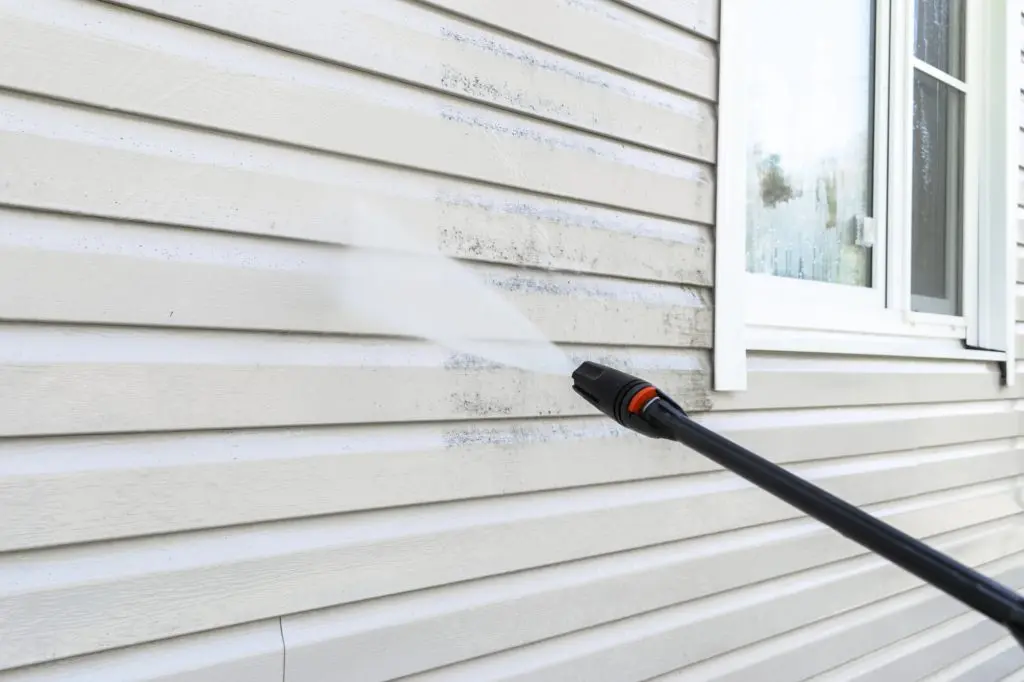
Blast the wrong surface with a pressure washer and you can gouge wood, crack stucco, or drive water behind your siding. This guide explains the difference between power washing and soft washing, which method suits each surface on your Winnipeg home, and why the right choice matters before you paint. Here’s what you’ll learn: how each method works, when to use which, and how our climate factors in.
Power washing uses high-pressure water to blast off dirt and grime, while soft washing uses low pressure with cleaning solutions to safely remove mold, mildew, and algae. In Winnipeg, hard surfaces like concrete and driveways handle power washing, while delicate surfaces — siding, stucco, painted wood, and roofs — should be soft washed to avoid damage. Choosing correctly protects your home and your paint job.
What’s the difference between power washing and soft washing?
The core difference is pressure: power washing relies on force to clean, while soft washing relies on cleaning solutions and low pressure. Power washing (often used interchangeably with pressure washing) is fast and effective on tough, durable surfaces. Soft washing gently lifts organic growth without risking damage.
- Power washing: high pressure, best for concrete, brick, and driveways.
- Soft washing: low pressure plus detergents, best for siding, stucco, wood, and roofs.
- Both remove buildup, but only soft washing kills the mildew and algae that regrow if left behind.
Which surfaces need which method in Winnipeg?
Match the method to the surface: durable masonry can take pressure, but anything that can be gouged, cracked, or driven with water needs soft washing. Winnipeg’s freeze-thaw climate makes this especially important, because water forced into stucco or behind siding can freeze and cause damage.
| Surface | Recommended Method | Why |
|---|---|---|
| Concrete driveways, walkways | Power washing | Durable, handles high pressure |
| Brick and masonry | Power (low) / Soft | Avoid blasting out mortar |
| Vinyl and aluminum siding | Soft washing | Pressure drives water behind panels |
| Stucco | Soft washing | High pressure cracks and pits it |
| Painted wood, decks | Soft washing | Pressure gouges and splinters wood |
| Roofs | Soft washing | Pressure strips granules and shingles |
Should you power wash or soft wash before painting?
Before painting, soft washing is usually the safer, more effective prep because it removes the mold, mildew, and chalk that ruin paint adhesion without damaging the surface. Paint won’t bond to a dirty or spore-covered surface, and high pressure can force water into materials that then take days to dry. A gentle, thorough wash followed by proper drying time is the goal.
The exception: heavily soiled concrete or masonry being painted can handle power washing. For siding, stucco, and wood — the surfaces most often painted — soft washing wins.
Which is right for your home?
If you’re cleaning a driveway, patio, or concrete surface, power washing is the efficient choice. If you’re cleaning siding, stucco, a deck, or prepping any of these for paint, soft washing protects the surface while doing a better job on organic growth. When you’re not sure — or you’re combining cleaning with a repaint — a professional can select the right method and pressure for each surface. Our power washing service in Winnipeg uses the appropriate technique for each material so nothing gets damaged.
Timing matters too — knowing how often to schedule power washing in Winnipeg helps you keep exterior surfaces ready for paint. For background on the equipment and pressures involved, the pressure washing overview on Wikipedia is a helpful primer.
Get your exterior cleaned the right way
Want your home cleaned safely and prepped for paint? Request a free estimate from Lakeside Painters. We proudly serve Winnipeg, MB and the surrounding Manitoba communities — including homeowners in Selkirk, Steinbach, Stonewall, and Niverville, plus the wider Interlake and cottage country. Call (204) 791-8352 or visit our contact page for a no-pressure quote.
Frequently Asked Questions
Is soft washing better than power washing?
Neither is universally better — it depends on the surface. Soft washing is better for delicate surfaces like siding, stucco, wood, and roofs because it cleans without damage, while power washing is better for durable concrete and masonry. Using the wrong method on the wrong surface is what causes damage.
Can power washing damage my siding or stucco?
Yes — high pressure can crack stucco, pit its surface, and force water behind vinyl or aluminum siding, where in Winnipeg’s climate it can freeze and cause problems. That’s why these surfaces should be soft washed. A professional adjusts pressure and technique to protect the material.
Do I need to wash my house before painting?
Yes — washing removes dirt, chalk, mold, and mildew that stop paint from bonding, which is one of the most common causes of early peeling. For most painted surfaces, soft washing is the safest prep. The surface must also dry fully before painting begins.
How long should I wait to paint after washing?
You should let the surface dry completely, which can take a day or more depending on the material and weather. Painting over damp siding, stucco, or wood traps moisture and leads to adhesion problems. In Manitoba, a dry, mild stretch of weather is ideal for washing and then painting.
Is power washing safe for decks and fences?
Standard high-pressure washing can gouge and splinter wood, so decks and fences are usually better cleaned with soft washing or low-pressure techniques. This lifts dirt and graying without tearing up the grain. Proper cleaning also helps stain or paint adhere better afterward.

Tyler is a highly motivated and hardworking individual with an entrepreneurial mindset and a genuine passion for people. He is currently pursuing a Bachelor of Commerce (Honours) degree, majoring in Marketing and Small Business/Entrepreneurship.
As the owner of Lakeside Painters, a Winnipeg-based painting company serving Winnipeg and surrounding cottage country regions, Tyler has gained hands-on experience in business ownership, customer service, sales, and project management. Lakeside Painters specializes in high-quality residential and commercial painting services, including interior painting, exterior painting, wood staining, and stucco coating, with a strong focus on professionalism, attention to detail, and customer satisfaction.
With an energetic and optimistic attitude, Tyler thrives in team environments and is willing to take on challenges in fast-paced, high-pressure settings. He brings strong problem-solving abilities, excellent communication skills, and a natural ability to connect with and understand others—skills he has developed through previous sales roles and his experience building Lakeside Painters.