
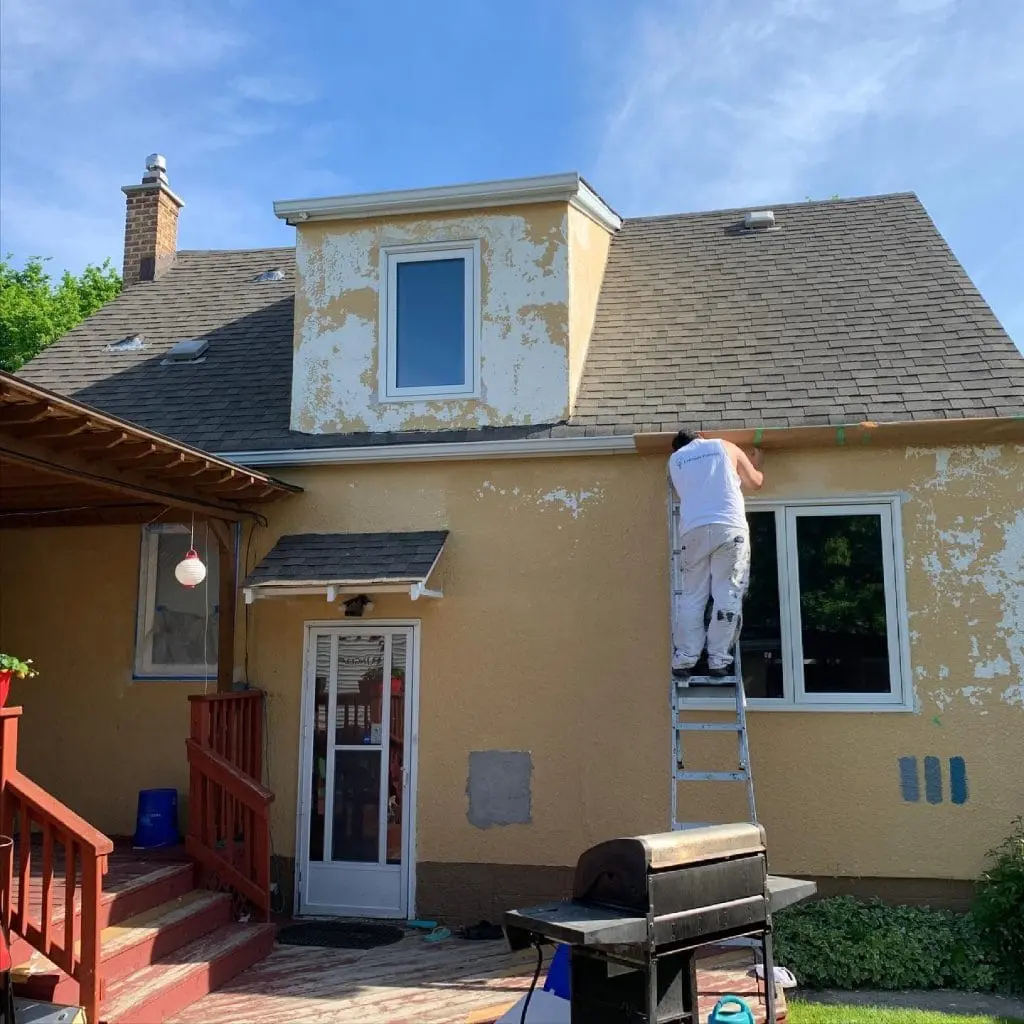
Winnipeg homes face wide temperature swings, dry winters, and intense summer sun. That combination pulls at paint films, opens joints, and invites moisture into places it shouldn’t be. The right coating system—paired with the proper prep and timing—keeps siding, stucco, wood, and brick looking sharp through February and beyond. Use this guide to plan an exterior repaint that stands up to freeze–thaw without cracking or peeling.
Why Freeze–Thaw Wrecks Paint (And What to Do About It)
- Movement: Surfaces expand in daytime warmth and contract at night. Paint needs enough flexibility to bend without splitting.
- Moisture: Meltwater, rain, and condensation travel into tiny gaps. If moisture sits behind paint, it blisters or peels.
- UV: Summer sun weakens low-grade binders, making coatings brittle right before winter stress arrives.
Your countermeasures: selecting flexible, well-adhered coatings can make your exterior feel more durable, giving homeowners and contractors confidence that their investment will withstand Winnipeg’s winter challenges.
Pick the Right System by Surface
Stucco (Winnipeg’s staple)
- Best fit: High-quality acrylic masonry paints or elastomeric coatings. Acrylics breathe well and handle vapor; elastomerics bridge hairline cracks and shed bulk water.
- Use elastomeric when you see a pattern of hairline cracking or exposure to wind-driven rain.
- Use acrylic masonry when: You want stronger breathability, especially on older stucco that needs to exhale.
Prep musts: low-pressure wash, treat efflorescence, fill hairline cracks with flexible fillers, prime alkali areas where needed, and back-roll to drive coating into pores.
Wood siding and trim
- Best fit: Primer on all bare wood plus a top-tier 100% acrylic topcoat; or a solid-colour stain for boards that move a lot.
- End-grain sealing: Critical. Open-end-grain drinks water and accelerates peeling.
- Caulk: Use high-movement, paintable sealants at vertical joints and trim transitions.
Aluminum siding
- Best fit: Thoroughly wash to remove chalk, spot-prim oxidized areas with an acrylic/bonding primer, then apply a 100% acrylic finish.
- Why it works: Acrylics flex in the cold and maintain colour better than economy coatings.
Vinyl siding
- Best fit: 100% acrylic exterior paints in vinyl-safe colours to avoid warping.
- Clean first: Dirt and static attract dust—wash until water sheets off cleanly.
Brick and masonry
- Best fit: Breathable masonry coatings or mineral finishes that allow vapor to pass.
- When to avoid tight films: If you see damp patches or previous peeling from trapped moisture.
The Winnipeg Weather Window: Timing That Protects the Film
- Aim for: Stable stretches in late spring, summer, or early fall when both daytime and overnight temperatures sit within product specs.
- Stop earlier in the day in the fall, as dew forms quickly. A film that skins over but doesn’t cure can lose adhesion.
- Watch wind: On stucco and masonry, wind dries the surface too fast—work shaded sides first and keep a wet edge.
Prep That Makes Coatings Last
- Full wash: Remove chalk, dust, and organic growth. Paint won’t stick to powder.
- Scrape & sand: Feather failing edges to sound paint; glossy spots get scuff-sanded for tooth.
- Dry-out: Moisture behind coatings is the enemy. Let washed surfaces dry thoroughly, especially shaded elevations.
- Repair & prime:
- Stucco cracks: flexible fillers; prime patched areas.
- Bare wood: exterior wood primer; seal knots if present.
- Aluminum oxidation: bonding primer where chalk persists.
- Masonry efflorescence: brush off salts, dry, and use masonry primer if needed.
- Caulk smart: Cut out failed beads and tool new, paintable sealant rated for movement.
- Back-roll porous substrates: After spray application on stucco/masonry, back-roll to push the coating in and even the film.
Coat Count & Film Build (Your Insurance Policy)
- Walls/siding: Two finish coats over sound, prepped surfaces.
- Dark-to-light or light-to-dark shifts: Expect spot priming or a full prime for colour holdout.
- Stucco with hairlines: Consider a higher-build first coat or elastomeric to bridge micro-movement.
- Trim/doors: Minimum of 2 coats in satin or semi-gloss for durability.
Why this matters: Adequate film build, achieved through two coats, enhances flexibility and UV resistance—key factors for paint survival during Winnipeg’s harsh winter conditions.
Caulk & Joints: Small Lines, Big Impact
- Where to look: Tops of windows/doors, vertical butt joints, siding-to-trim transitions, penetration points (vents, cable lines).
- What to use: A paintable, flexible sealant designed for exterior movement—avoid brittle, hard-drying options.
- When to paint over: After full cure; paint shields caulk from UV so it stays elastic longer.
Colour & Sheen Choices That Help in the Cold
- Body colour: Mid-light to mid-tone colours weather gracefully and hide dust and salt spray.
- Sheen:
- Low-sheen/satin siding finishes balance dirt resistance with movement tolerance.
- Flat to low-sheen on stucco hides patch texture and minor waves.
- Satin or semi-gloss on trim/doors for scuff resistance and easy cleaning.
- Vinyl & metal: Avoid extra-dark, non-rated colours that can overheat and stress panels.
Winnipeg-Specific Red Flags to Fix Before You Paint
- South and west walls: UV-chalking and heat stress show up first here—wash thoroughly and check adhesion.
- Bottom courses of siding: Splash-back from rain and snowbanks loads water into end-grain—prime bare spots and seal edges.
- Deck ledgers and stair stringers: Constant wet/dry cycling; upgrade caulk and ensure flashing works.
- Stucco control joints: Hairlines here telegraph through paint—fill flexibly.
- Garage door trim and man-doors: Frequent contact and snow shoveling; bump to tougher sheens.
Sample Scope & Budget Signals (Guidance Only)
- Stucco refresh (hairlines, good base): Wash → crack-fill → acrylic masonry topcoat. Efficient and durable.
- Stucco with widespread hairlines: Wash → flexible crack fillers → elastomeric system for bridging. Higher material cost, excellent movement handling.
- Wood siding with peeling: Scrape/sand to sound paint → prime bare wood → 100% acrylic finish → re-caulk. Labour heavier up front, long-term payoff.
- Aluminum with chalk: Deep clean → spot bonding primer → acrylic finish. Moderate scope, strong transformation.
- Brick with prior peeling: Moisture diagnosis first → breathable masonry coating. Avoid trapping vapor.
DIY vs. Hiring Exterior Painters (Winnipeg Context)
DIY fits small, reachable areas with straightforward prep. You’ll need time, weather awareness, ladders, drop sheets, safe washing, and product knowledge.
Hire a crew when elevations are tall, multiple substrates are involved, or failures are widespread. Sequencing (repairs → priming → body → trim → doors) and weather-timed coats cut risk and keep results consistent.
Maintenance That Extends Paint Life Through Many Winters
- Annual rinse-down: Remove dust and salts that hold moisture.
- Spring joint check: Look for open caulk after winter contraction.
- Touch-ups early: Small bare patches take on water fast; spot-prime and coat as soon as you see them.
- Trim care: Door bottoms and lower casings take abuse—monitor and refresh.
Frequently Asked Questions
1) Is elastomeric always better for stucco in Winnipeg?
Not always. It’s excellent where hairline cracking is common or wind-driven rain is an issue. On older stucco that needs to breathe more, a high-quality acrylic masonry paint can be a better match.
2) Can I repaint late in the fall?
Yes—if the forecast keeps both daytime and overnight temperatures within the coating’s spec and surfaces are dry. Stop earlier in the afternoon to avoid dew settling on fresh film.
3) Why does my south wall fade faster?
It takes the most UV and heat. Wash away chalk before repainting, and use higher-grade acrylics with strong UV resistance on sunny elevations.
4) How do I prevent peeling at the bottom of siding?
Seal end grain, maintain caulk lines, keep snow from sitting against walls, and ensure downspouts carry water away from the foundation.
5) My aluminum siding is chalky. Do I need a full primer?
Often, you can wash thoroughly, spot-prime where oxidation persists, and then apply two coats of quality acrylic. A full bonding primer is used when chalk remains widespread.

Tyler is a highly motivated and hardworking individual with an entrepreneurial mindset and a genuine passion for people. He is currently pursuing a Bachelor of Commerce (Honours) degree, majoring in Marketing and Small Business/Entrepreneurship.
As the owner of Lakeside Painters, a Winnipeg-based painting company serving Winnipeg and surrounding cottage country regions, Tyler has gained hands-on experience in business ownership, customer service, sales, and project management. Lakeside Painters specializes in high-quality residential and commercial painting services, including interior painting, exterior painting, wood staining, and stucco coating, with a strong focus on professionalism, attention to detail, and customer satisfaction.
With an energetic and optimistic attitude, Tyler thrives in team environments and is willing to take on challenges in fast-paced, high-pressure settings. He brings strong problem-solving abilities, excellent communication skills, and a natural ability to connect with and understand others—skills he has developed through previous sales roles and his experience building Lakeside Painters.